Projectportfolio
2026 - 2032

We will explore different approaches that strengthen inter- and transdisciplinary learning and contribute to societal transformation. The projects provide spaces for experimentation in which new educational concepts can be designed, tested and evaluated and, where they prove effective, implemented and scaled up in an evidence-informed way.
-
Transdisciplinary formats for capstone and graduation projects with societal impact
Students connect their thesis or graduation project to a concrete societal challenge. Within this educational concept, students work together with researchers and societal partners on complex issues. With attention to the societal impact of their research, students learn to incorporate feedback from different disciplinary and societal perspectives. They develop as academic citizens by translating their academic knowledge into societal applications. This new form of graduation requires different approaches to supervision and new forms of co-creation between teachers, students and societal partners.
-
Impact through time
vStudents explore the long-term consequences of societal and technological choices. At the same time, the project encourages students to develop into academic citizens who not only understand how societal change comes about but also take responsibility for the future impact of their own actions. The project creates an inter- and transdisciplinary learning environment in which insights from different disciplines and societal perspectives are brought together and critically examined. Developing and implementing this new educational approach requires intensive collaboration between educators, researchers and societal partners, thereby creating opportunities to develop and explore new forms of supervision and co-creation.
-
Interprofessional learning (mbo-hbo-wo collaboration)
By bringing together different forms of academic, professional, practical and experiential knowledge, students learn to integrate perspectives and jointly develop solutions that can be translated into action. This strengthens students’ capacity to act in, and with society. It creates learning environments in which differences in knowledge, experience, interests and values become visible and can generate productive friction. This strengthens students’ capacity for dialogue, empathy and critical thinking, as well as their ability to take and substantiate their own position. For teachers, the project provides an experimental space in which to develop new roles as process facilitators, coaches and connectors between educational institutions and societal partners.
-
Makerspace
We explore the possibilities of developing a makerspace in which students from different academic disciplines have the collective space to visualise ideas, experiment with concepts and test them. In addition to developing their capacity to think, students also develop their capacity to make and act. In the makerspace, knowledge is materialised: students learn to translate concepts into concrete applications in society. This is precisely where the added value of a makerspace lies; as a shared learning environment connecting education, research and society.
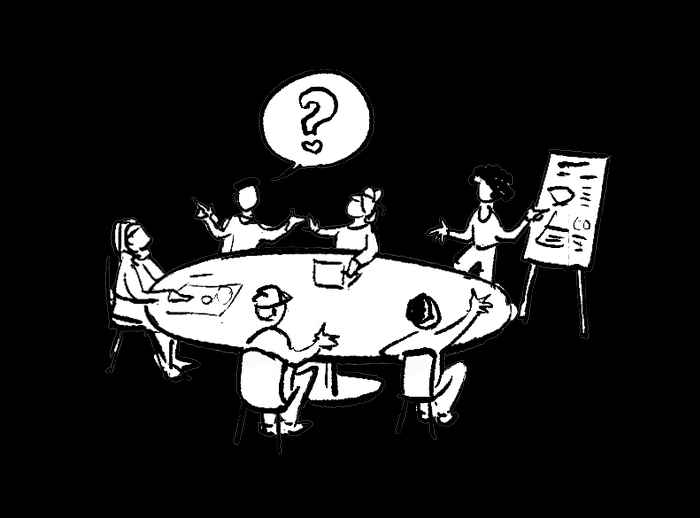
The precise composition of the project portfolio is deliberately not (yet) fully defined. Educational needs within UvA programmes, societal developments and opportunities for collaboration are constantly changing; thereby requiring a level of flexibility rather than working with predetermined project plans. As such, the IIS will continuously reshape the portfolio throughout the implementation of this strategy and will do so in close collaboration with faculties, students, researchers and societal partners. Existing initiatives can be further developed, connected or scaled up, while new projects can emerge in response to opportunities or societal challenges.

In addition to the projects described above, we will also work on smaller projects during the implementation of the 2026-2032 strategic agenda that can be readily integrated into existing initiatives. The university campus should be a physical and vibrant meeting place where students can develop both academically and socially. We therefore intend to continue the 'Create Your Campus' challenge in the coming years as part of the Sticky Campus initiative within elective and honours education. In addition, several existing funded projects will continue in the coming years, including Placemaking, Local Global Think Tank and Empowered Minds. Together, these initiatives contribute to the strategic impact goals of the IIS: strengthening collaboration across disciplines, educational institutions and societal partners; developing academic citizenship; creating transformative learning environments for students; and supporting teachers in facilitating these forms of education.