New elective Big Histories in Amsterdam
Interview with Esther Quaedackers
12 June 2025
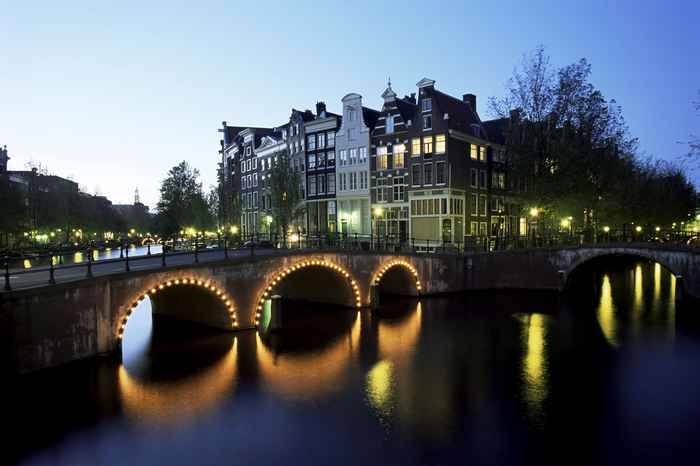
A Course Rooted in History
Big History has been taught at the University of Amsterdam since 1994. “The course was originally developed by Johan Goudsblom and Fred Spier,” Quaedackers explains. She has now been teaching it for more than fifteen years. “Big History is a form of history that places human history in the broader context of natural history and integrates these different types of history in various ways.”
Why Amsterdam?
The decision to focus on the city was not solely prompted by the anniversary. “I often use Big History as a lens to look at specific themes, both in my research and in teaching,” Quaedackers explains. Previous versions of the course focused on the role of information, on pandemics, and on how Big History relates to local forms of history. “Students not only learn to approach these themes differently, but working thematically also helps them grasp Big History more easily. They can connect it to something concrete they already know.”

The City as a Learning Environment
This approach previously led students to go out into the city with the assignment to examine a place, object, or phenomenon in Amsterdam through a Big History perspective. “It really yielded surprising results,” says Quaedackers. “One student, for instance, studied the glass of the Agnietenkapel. She described how that glass stems from processes that began with the formation of stars, continued through the erosion of rocks, the evolution of calcium skeletons, and Roman technologies, eventually culminating in the architectural history of Amsterdam.” These stories show how the vast is hidden in the small, and vice versa.
A New Way of Seeing
According to Quaedackers, the most important outcome is that students learn to see differently. “You learn to connect very large and very small things. Many students have never considered that before.” She believes this not only leads to new research questions, but also to something else. “It often leads to a sense of wonder. To the realization that the world around you is much richer than you thought. And in this case: that the city you live in is actually a kind of endpoint of billions of years of history. That seems like a beautiful gift for Amsterdam’s 750th birthday.”
Students can still register for this course until June 16. Contract students and professionals can register up to two weeks before the course begins. They can read here how to register.