Interview Academic Skills for Interdisciplinary Research
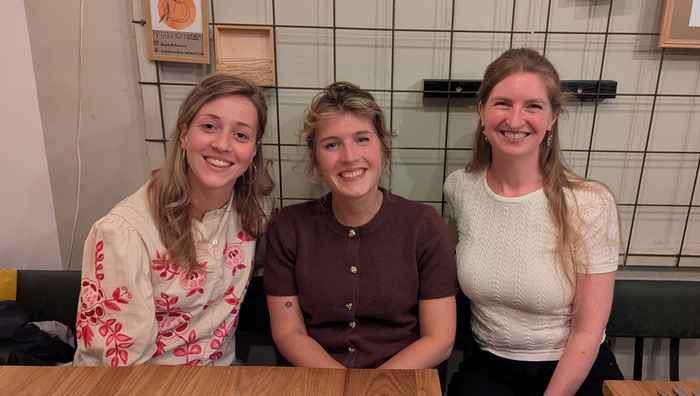
With authors Anne Uilhoorn, Femke Giesbers, en Maaike van Tuinen
28 September 2026
Why an interdisciplinary handbook?
“Interdisciplinary study requires additional academic skills,” explains Anne Uilhoorn. Students must not only know how their own discipline works, but also understand how research methods, collaboration and academic research differ across other disciplines. “Think of the balance between quantitative and qualitative research, and the different forms of collaboration,” Anne explains. “As an interdisciplinary student, you have more options to choose from, but you also have to take more factors into account.” More and more degree programmes are incorporating interdisciplinary elements, and there are an increasing number of interdisciplinary degree programmes. There is a great demand for a good handbook.
What’s new?
The new edition differs from previous versions in several respects. The examples are more interdisciplinary and less heavily focused on the natural sciences. The section on research has also been expanded. “Research is more than just setting up an empirical experiment: philosophical, qualitative and theoretical research involve entirely different methods and techniques,” says Femke.

In addition, the focus on studying itself has been restored. The 2015 edition included practical tips on planning and active learning; the latest edition no longer contained these. “We’ve now brought them back to better cater for first-year students,” says Femke. The chapter on studying has been revised by Femke. “I can really empathise with students who are thrown in at the deep end. Starting university is quite daunting.”
Current topics have also been given a prominent place. Maaike cites diversity, affective learning and AI as subjects that have become more important in recent years.
How is AI being addressed?
Generative AI has become an integral part of a modern student’s life, and is therefore one of the most important new topics in the handbook. “The chapter on generative AI contains a great deal of nuance regarding the ethical aspects of AI, but also offers guidance for situations in which students actually use AI,” says Femke. Anne has noticed that many lecturers were keen to get started with generative AI straight away, sometimes even before they could properly explain the nuances involved. The book can help lecturers make more informed choices in this regard and engage in dialogue with students on the subject.
How do you start writing?
To ensure a focused start, the authors spoke to lecturers and students about the previous book. This yielded a great deal of valuable, though sometimes contradictory, input. “It was difficult to work out how we could satisfy everyone whilst also meeting our own requirements,” says Anne. Lecturers often wanted a solid theoretical foundation first, whilst students needed practical examples, exercises and less reading material. According to the authors, theory can be overwhelming. That is why they sought a middle ground, including a focus on the philosophical foundations of science, but without requiring students to read every section.
What did you learn from the process?
“The writing process turned out to be an interdisciplinary collaborative project in its own right,” laughs Femke. “In my mind, when you’re writing a book, you write full-time all week. Because of our jobs and our lives outside of that, that wasn’t possible.” That’s precisely why it was so instructive.
Maaike singles out the process of making choices as a key lesson. “You’re constantly making choices about language, content and so on. You have to trust that it will all work out. ‘Kill your darlings.’ Femke adds: “You have to get used to being able to make your own choices about the book’s content and then trust those choices. Just as we ask of students, you must also be able to explain your choices.”
Finally, Anne emphasises that although the book was written by three authors, the result is the product of a much larger collaborative effort. “When you consider how many people are ultimately involved in such a process, it’s actually a massive project. It goes far beyond just the three of us.”
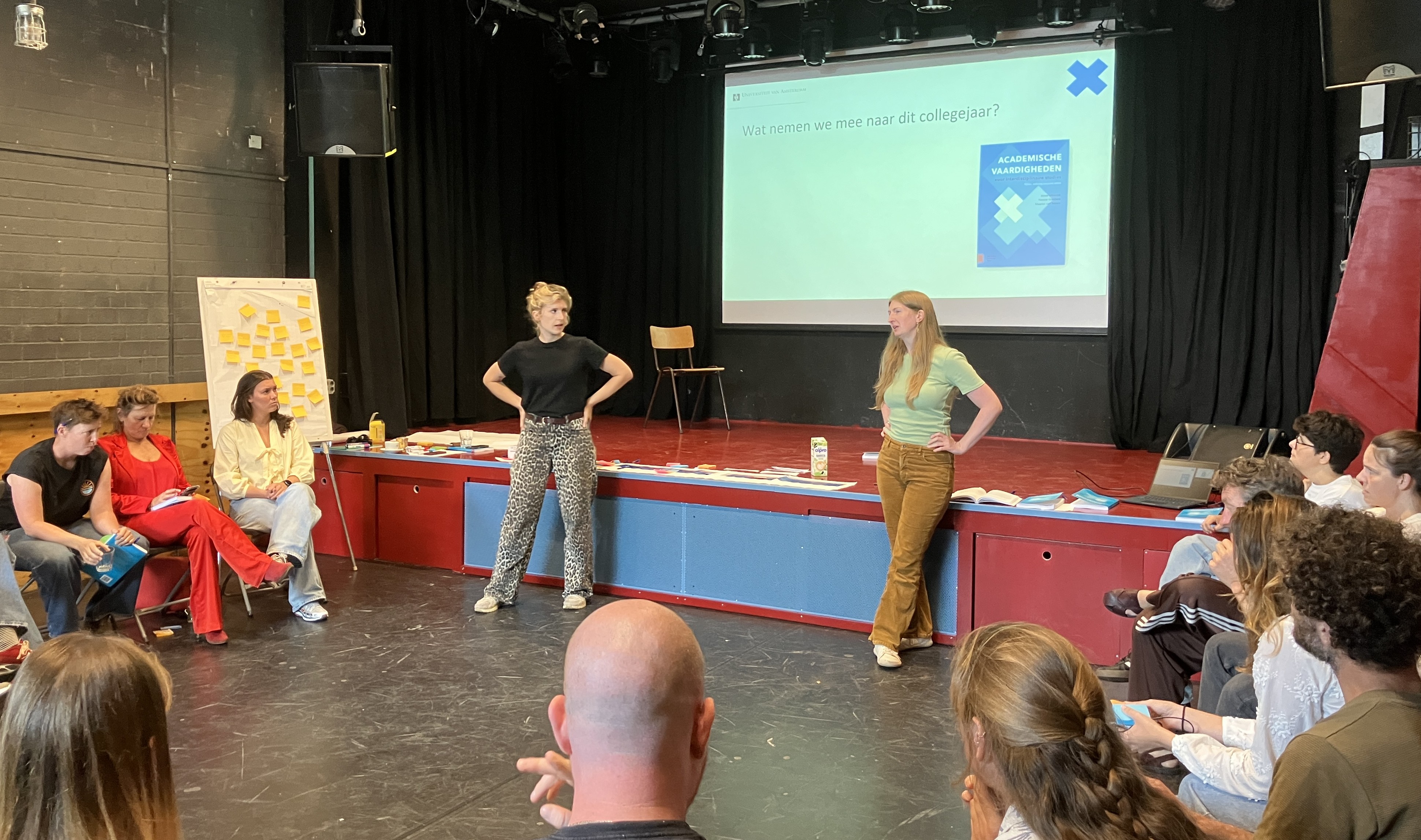
The book Academische vaardigheden voor Interdisciplinaire Studies (Academic Skills for Interdisciplinary Studies) is being implemented in several degree programmes and modules and is now on sale at Amsterdam University Press. The book is available in Dutch only.